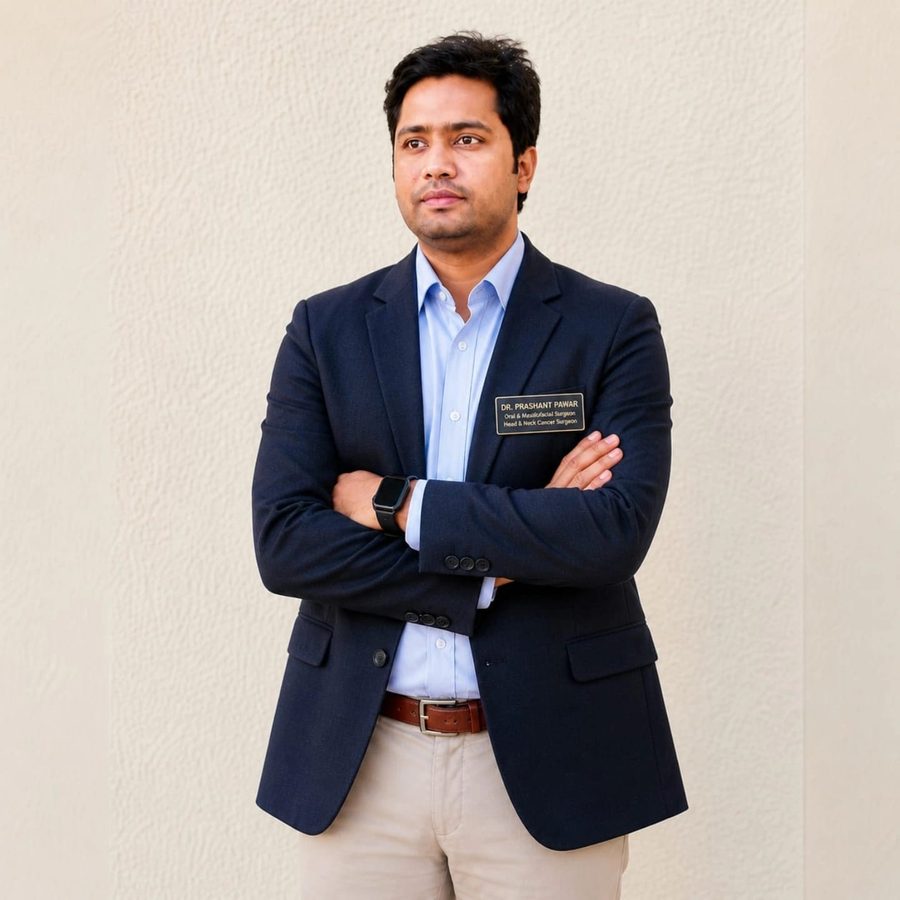
Dr. Prashant Pawar performs salivary gland and parotid surgery in Pune for tumours, swellings and stones of the salivary glands. As a head & neck surgeon at Silverbirch Multispeciality Hospital, Narhe, he operates with special care to protect the facial nerve.
The major salivary glands include the parotid glands (in front of the ears), the submandibular glands (under the jaw) and the sublingual glands. Lumps in these glands can be benign or, less often, cancerous. Parotid surgery is delicate because the facial nerve runs through the gland, so it should be done by a surgeon experienced in head and neck surgery.
Superficial and total parotidectomy for benign and malignant parotid tumours, protecting the facial nerve.
Surgery for tumours and swellings of the submandibular gland under the jaw.
Treatment for stones (calculi) blocking the salivary ducts and causing pain and swelling.
Management of sialadenitis (gland infection) and recurrent swelling.
Assessment of lumps near the ear, jaw and upper neck.
Cancer surgery with neck node clearance when required, as part of complete care.
The facial nerve, which moves the muscles of the face, passes directly through the parotid gland. During parotid surgery, this nerve must be carefully identified and preserved. An experienced head and neck surgeon operates with this as a priority, reducing the risk to facial movement while fully removing the tumour.
Dr. Prashant Pawar performs salivary gland and parotid surgery in Pune at Silverbirch Multispeciality Hospital, Narhe. He is a head and neck surgeon experienced in facial-nerve-preserving parotidectomy. Call +91 97623 34583.
Most salivary gland tumours, especially in the parotid, are benign. Some can be cancerous. A needle test and scans help determine this, and surgery both treats the lump and confirms the diagnosis.
The main concern is the facial nerve, which runs through the parotid gland. An experienced head and neck surgeon identifies and protects this nerve during surgery to preserve facial movement.
Swelling can be caused by stones blocking a duct, infection (sialadenitis), or a tumour. Persistent or recurring swelling of a salivary gland should be assessed by a specialist.
Most people recover within a couple of weeks. Your surgeon will give you specific aftercare advice based on the procedure performed.
Silverbirch Multispeciality Hospital, Narhe, Pune · Also at Satara
📞 +91 97623 34583 💬 WhatsApp